About the project
The project is conducted at the Institute of History of the Jagiellonian University (UJ) and is funded through the Jagiellonian University Strategic Programme “Excellence Initiative” (as part of the “Science for Business and Society” competition). The project is led by Dr Alicja Jarkowska of the Institute of History of the Jagiellonian University and is carried out in cooperation with the Centre for Research on the History and Culture of Krakow’s Jews and AGH University of Krakow, represented by Dr Eng. Stanisław Szombara. In 2024, the project was incorporated into the framework of the National Science Centre (NCN) OPUS 26 grant entitled Behind the Walls of the Krakow Ghetto (1941–1943) [https://projekty.ncn.gov.pl/index.php?projekt_id=602680]. Dr Martyna Grądzka-Rejak joined the project team in the same year. Since the 2020/2021 academic year, the project has also involved interns from the Centre for Research on the History and Culture of Krakow’s Jews, as well as volunteers from the Institute of History of the Jagiellonian University. jest częścią grantu NCN (OPUS 26) pt. „Za murami krakowskiego getta (1941-1943)” https://projekty.ncn.gov.pl/index.php?projekt_id=602680 . W tym roku do projektu dołączyła dr Martyna Grądzka-Rejak.
Od roku akademickiego 2020/2021 w projekcie uczestniczą praktykanci z Ośrodka oraz wolontariusze z Instytutu Historii UJ.
About the project
It is estimated that between 3,000 and 5,000 Krakow Jews survived the Second World War, out of approximately 68,000 Jews living in the city prior to the German occupation. It is currently assumed that the majority of survivors spent the war in the Soviet Union and in territories incorporated into the USSR, having fled there at the beginning of the war. After 1945, Jews began returning to Krakow, although many left the city in the summer of that year following the anti-Jewish riots of August 1945. Further waves of emigration took place during the 1950s, in connection with the consolidation of communist rule in Poland, the liquidation of small private businesses, and the decline of private trade.
To date, the places of residence, movement, hiding, and migration of Krakow Jews throughout the territory of the General Government, as well as along routes other than those leading to the Soviet Union, have not been comprehensively documented or studied.
The aim of the project is to identify and document these locations—including addresses and other geographical sites—from 1939 through the end of the 1940s, taking into account the post-war period. The research employs spatial analysis tools, including a Historical Geographic Information System (HGIS), as well as geodetic and statistical methods. The principal outcomes of the project will be a spatial map, a geoportal, and an openly accessible database containing information on the locations and experiences of Krakow Jews during the period under study.
The database is intended to consolidate the largest possible body of historical and archival data concerning the wartime experiences of Krakow Jews. This will enable quantitative analyses, including determining how many Jews survived within the territory of the General Government and under what circumstances and in which locations they survived, while also making it possible to reconstruct the individual histories of those affected. The project may provide a foundation for further genealogical research, museum and exhibition projects, as well as public discussions and other initiatives aimed at disseminating historical scholarship. a tym bardziej prześledzenia miejsc pobytu, ukrywania się, przemieszczania w ujęciu ilościowym i kartograficznym.
The implementation of these analyses required the collection of the largest possible body of relevant data. The research draws on materials from Polish and international archives, including Yad Vashem, the United States Holocaust Memorial Museum (USHMM), the Bundesarchiv, and the Arolsen Archives. Existing databases were also consulted, including databases documenting deportations (e.g. Yad Vashem, 2020) and databases concerning individuals who survived in hiding on the so-called “Aryan side” (Polish Center for Holocaust Research, 2020).
The research required cooperation with specialists in spatial analysis, cartography, and Geographic Information Systems (GIS), particularly with regard to standards for recording and structuring information, the visualization of places, individuals, and events in geoportals, and the application of HGIS methodologies to the presentation of large volumes of historical data. Traditional historical research methods enable scholars to collect archival materials, subject them to critical analysis, and reconstruct historical events. However, historians generally do not possess the specialized tools required to systematically store, spatially structure, and quantitatively and cartographically analyze such data, particularly in order to trace patterns of residence, hiding, and movement. The project’s principal investigator, Dr Alicja Jarkowska, conducted preliminary research that resulted in the creation of two databases. The first concerns KL Plaszow and contains 6,032 records; the second concerns Jews who were present in Krakow during the Second World War and contains nearly 5,000 records. Following data processing and standardization, these databases were used as the foundation for further research within the project. The database published on the project website brings together personal data and information concerning the places where Jews stayed during the German occupation, including locations associated with escape, hiding, and attempts to obtain assistance or shelter. The archival evidence is assessed by historians and cross-referenced with other available sources. Data concerning individuals, locations, and chronology are analyzed in order to identify recurring locations and routes, as well as the absence of such patterns, in relation to the dynamics of the occupation, the Holocaust, and the policies of the Third Reich. The analysis also takes into account topographical, climatic, and social factors. The materials used to construct the database derive from many years of archival research conducted by the project’s principal investigator, Dr Alicja Jarkowska, in Polish and international archives, including the Institute of National Remembrance (AIPN), the National Archives in Krakow (ANKr), Yad Vashem, the Bundesarchiv, YIVO, the Jewish Historical Institute (AŻIH), and the Wiesenthal Archive, among others. Members of the project team have also conducted local archival research. The sources collected through these efforts were processed and entered into the database by members of the project team. Before being incorporated into the database, the materials underwent critical source analysis and verification against other documents and publicly accessible databases, including:
Bad Arolsen: https://collections.arolsen-archives.org/en/search/
Yad Vashem: https://yvng.yadvashem.org/index.html?language=en/
https://collections.yadvashem.org/en/righteous/search-results/Krakow?page=1
USCShoah Foundation: https://vha.usc.edu/home
KL Plaszow https://ca.muzeumkrakowa.pl/
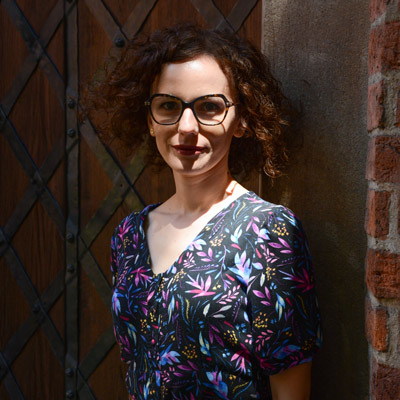
Kierownik projektu oraz opieka merytoryczna
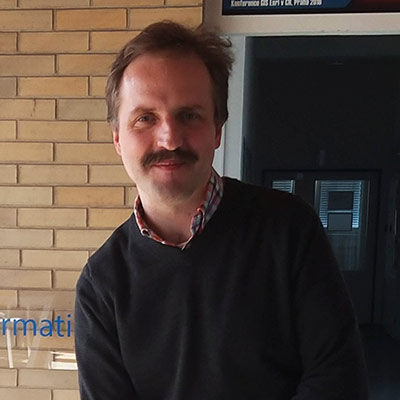
Opieka GIS i kartograficzna
Współpracownicy
- mgr Katarzyna Boryczka
- Cristian Dumitrica
- mgr Aleksandra Kolanko
- mgr Konrad Mróz
- Kaja Kępczyńska
- Annika Wrona
Praktykanci
Poprzedni praktykanci
- Julia Mazurek
- Julia Lisowska
- Zuzanna Grabska
- Sofiia Yarmolytska
- Marta Karczewska
- Karolina Mazur
- Aleksandra Janus
- Marek Radoń